Essential Guide: Managed IT Services for Robust HIPAA Compliance in Healthcare
Healthcare organizations today navigate a complex landscape of patient care, technological advancement, and stringent regulatory requirements. Effectively managing information technology (IT) infrastructure while ensuring data security and compliance with regulations like the Health Insurance Portability and Accountability Act (HIPAA) is a monumental challenge.
This is where Managed IT Services for Healthcare Compliance (HIPAA) emerge as an indispensable solution. These services enable healthcare providers to successfully deal with the intricate demands of IT management and regulatory adherence, allowing them to focus on their primary mission of patient well-being.
Understanding Managed IT Services in a Healthcare Context
Managed IT Services involve outsourcing the proactive management and support of an organization’s IT infrastructure to a third-party provider. For healthcare, this means an external team takes responsibility for everything from network security to data backup, ensuring systems run smoothly and securely.
The term “managed” itself implies a comprehensive and active approach, akin to succeeding in doing or dealing with the multifaceted aspects of modern IT. This partnership allows healthcare entities, regardless of their size, to access enterprise-level IT expertise without the overhead of an extensive in-house department.
The Criticality of HIPAA Compliance for Healthcare Entities
HIPAA is a federal law that establishes national standards to protect sensitive patient health information (PHI) from being disclosed without the patient’s consent or knowledge. Non-compliance with HIPAA can lead to severe penalties, including substantial fines, legal actions, and significant reputational damage for healthcare providers.
Beyond legal repercussions, a breach of protected health information (ePHI) erodes patient trust and can disrupt critical healthcare operations. Therefore, strict adherence to HIPAA’s Privacy, Security, and Breach Notification Rules is not merely a legal obligation but a cornerstone of ethical patient care.
Common IT and Compliance Challenges in Healthcare
Healthcare organizations face a unique set of IT challenges that complicate HIPAA compliance. Many struggle with limited internal IT resources, making it difficult to keep pace with evolving cyber threats and complex regulatory changes.
Furthermore, the reliance on disparate systems, legacy software, and the constant threat of ransomware attacks add layers of complexity to maintaining a secure and compliant IT environment. Balancing innovation with security and cost-efficiency requires specialized knowledge and continuous effort.
How Managed IT Services Bolster HIPAA Compliance
Managed IT Services providers specializing in healthcare possess the expertise and tools necessary to help organizations meet and maintain HIPAA compliance. They implement robust security protocols designed specifically for ePHI protection, proactively monitoring systems for vulnerabilities and potential threats.
This includes deploying advanced firewall solutions, ensuring data encryption for both data at rest and in transit, and establishing stringent access controls to safeguard sensitive information. Their proactive approach significantly reduces the risk of data breaches and ensures continuous compliance readiness.
Key Compliance Features Offered by Managed Service Providers (MSPs)
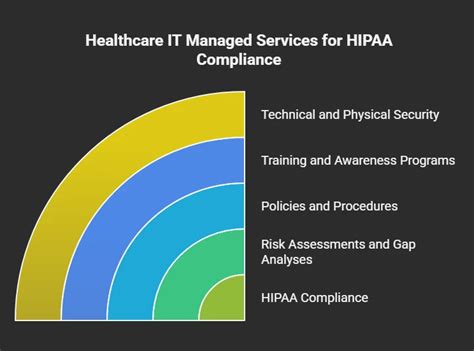
Expert MSPs offer a suite of services directly addressing HIPAA’s requirements. These typically include comprehensive risk assessments to identify potential vulnerabilities and regular security audits to ensure ongoing adherence to regulations.
They also implement robust data backup and disaster recovery plans, ensuring that patient data is always recoverable in the event of an outage or cyberattack. Furthermore, MSPs assist with developing and enforcing crucial policies and procedures, along with providing essential employee training on security best practices and HIPAA regulations.
Business Associate Agreements (BAAs) and Vendor Management
A crucial aspect of HIPAA compliance when engaging with third-party IT services is the Business Associate Agreement (BAA). A BAA is a contract required by HIPAA that ensures the business associate (the MSP) protects PHI in accordance with HIPAA rules.
Reputable Managed IT Service providers understand the importance of BAAs and are prepared to sign them, affirming their commitment to protecting your patient data. They also often help manage other vendor relationships, ensuring all third parties handling ePHI are themselves compliant.
Beyond Compliance: Additional Benefits of Managed IT Services
While HIPAA compliance is a primary driver, Managed IT Services offer numerous additional advantages for healthcare providers. These services can lead to significant cost savings by eliminating the need for expensive in-house IT staff and infrastructure investments.
Improved operational efficiency and system reliability are also key benefits, as proactive monitoring and maintenance minimize downtime and IT-related disruptions. This allows healthcare professionals to dedicate more time and resources to patient care, enhancing overall organizational effectiveness.
Access to Specialized Expertise and Scalability
Partnering with a Managed IT Service provider grants immediate access to a team of IT specialists with diverse expertise, including cybersecurity, cloud solutions, and regulatory compliance. This level of specialized knowledge would be costly and difficult to maintain internally.
Moreover, these services offer unparalleled scalability, allowing healthcare organizations to easily adjust their IT resources up or down based on evolving needs. This flexibility is vital for practices experiencing growth or adapting to new technological demands without significant capital outlay.
Choosing the Right Managed IT Service Provider for Your Practice
Selecting the right MSP is a critical decision that impacts your organization’s security and compliance posture. It is essential to choose a provider with a proven track record specifically in the healthcare sector, demonstrating deep understanding of HIPAA regulations and the unique challenges faced by medical practices.
Look for providers who offer comprehensive service level agreements (SLAs), transparent pricing, and strong references from other healthcare clients. Their commitment to continuous staff training, use of industry-standard security tools, and responsive support are all indicators of a reliable partner.
Conclusion: Securing the Future of Healthcare IT
Managed IT Services for Healthcare Compliance (HIPAA) are no longer a luxury but a fundamental necessity for modern healthcare organizations. They provide the robust security, consistent reliability, and expert guidance required to navigate the complex digital landscape while remaining compliant with stringent regulations.
By entrusting IT management to specialized professionals, healthcare providers can safeguard patient data, mitigate risks, optimize operational efficiency, and ultimately, dedicate their invaluable resources to delivering exceptional patient care. This strategic partnership ensures a secure and resilient IT foundation for the future of healthcare.
Frequently Asked Questions (FAQ)
What is HIPAA compliance in the context of IT?
HIPAA compliance in IT refers to adhering to the security and privacy rules set forth by the Health Insurance Portability and Accountability Act to protect electronic protected health information (ePHI). This includes implementing technical safeguards like encryption, access controls, audit logs, and administrative safeguards such as risk assessments and employee training.
How do Managed IT Services help with HIPAA compliance?
Managed IT Services assist with HIPAA compliance by proactively managing an organization’s IT infrastructure to meet regulatory standards. This involves implementing robust cybersecurity measures, conducting regular security audits and risk assessments, managing data backup and disaster recovery, and assisting with policy development and staff training to ensure ePHI is protected at all times.
What is a Business Associate Agreement (BAA) and why is it important?
A Business Associate Agreement (BAA) is a legally binding contract required under HIPAA between a healthcare provider (Covered Entity) and a third-party vendor (Business Associate) that handles protected health information (PHI). It ensures that the Business Associate will safeguard PHI in accordance with HIPAA’s rules, making it a critical component for engaging any external IT service provider.
What are the risks of HIPAA non-compliance for healthcare organizations?
The risks of HIPAA non-compliance are significant and include substantial financial penalties ranging from thousands to millions of dollars, legal action, reputational damage, and loss of patient trust. Non-compliance can also lead to operational disruptions and potentially compromise patient safety due to data breaches.
When should a healthcare organization consider Managed IT Services?
Healthcare organizations should consider Managed IT Services when they lack sufficient in-house IT expertise or resources to manage their complex IT infrastructure and ensure ongoing HIPAA compliance. It’s particularly beneficial for practices looking to improve cybersecurity, reduce IT costs, enhance system reliability, and free up internal staff to focus on core patient care.