Unlocking Financial Foresight: AI-Driven Predictive Analytics
AI-driven predictive analytics represents a revolutionary approach to understanding and anticipating future financial trends. It leverages sophisticated artificial intelligence (AI) and machine learning (ML) algorithms to process vast amounts of data, identifying patterns and making predictions with unprecedented accuracy and speed.
This paradigm shift moves beyond traditional statistical methods, offering financial institutions and investors a powerful tool to navigate increasingly complex and volatile markets. By harnessing the capabilities of AI, organizations can gain a significant competitive edge through enhanced decision-making.
The Evolution of Financial Forecasting
Historically, financial forecasting relied heavily on econometric models, statistical analysis, and expert human judgment. While these methods provided valuable insights, they often struggled with the sheer volume and velocity of modern financial data, leading to limitations in accuracy and timeliness.
Traditional models typically operate on predefined assumptions and linear relationships, making them less adaptable to sudden market shifts or the intricate non-linear dynamics inherent in global finance. The advent of big data and advanced computing power paved the way for more sophisticated analytical techniques.
How AI Transforms Predictive Analytics
AI-driven predictive analytics introduces a new dimension to financial forecasting by employing algorithms that can learn from data without explicit programming. These systems can identify subtle correlations and complex patterns that human analysts or traditional models might miss. Machine learning models, such as neural networks, support vector machines, and random forests, are at the core of this transformation.
They are trained on historical financial data, economic indicators, and even unstructured information to make highly probable predictions about future market behavior, asset prices, and risk exposure. This allows for dynamic adjustments to strategies based on real-time insights.
Key AI Techniques in Financial Forecasting
Machine Learning Algorithms
Machine learning encompasses a variety of algorithms crucial for financial prediction. Regression models can forecast continuous values like stock prices, while classification models predict categorical outcomes such as whether a stock will rise or fall. Time series analysis, enhanced by deep learning, is particularly effective for sequential financial data, capturing temporal dependencies and trends.
Deep learning, a subset of machine learning, utilizes multi-layered neural networks to process complex data types, including raw financial statements and market news. These networks excel at uncovering abstract features and relationships within data, leading to more robust and accurate forecasts.
Natural Language Processing (NLP) and Sentiment Analysis
Beyond numerical data, AI also processes vast amounts of unstructured text through Natural Language Processing (NLP). This includes analyzing news articles, social media feeds, analyst reports, and corporate filings to extract sentiment and identify potential market-moving information. Sentiment analysis, a key application of NLP, quantifies the emotional tone behind textual data.
By understanding public sentiment towards companies, industries, or economic policies, AI models can anticipate market reactions that might not be immediately apparent from quantitative data alone. This provides a holistic view of market drivers, combining both hard numbers and qualitative perceptions.
Data Sources for AI Models
The effectiveness of AI in financial forecasting heavily depends on the quality and diversity of the data it consumes. This includes traditional structured data like historical stock prices, trading volumes, interest rates, and macroeconomic indicators such as GDP and inflation rates.
Increasingly, unstructured data sources are also being integrated, including satellite imagery to track economic activity, anonymized credit card transaction data, and geopolitical events. The ability to synthesize insights from such disparate datasets is a hallmark of advanced AI systems, enabling a more comprehensive market understanding.
Benefits of AI-Driven Predictive Analytics
The adoption of AI in financial forecasting brings several significant advantages. Foremost among them is enhanced accuracy, as AI models can discern patterns and correlations too intricate for human analysis, leading to more precise predictions. This increased accuracy translates directly into better investment decisions and improved risk management.
Furthermore, AI offers unparalleled speed in processing and analyzing real-time data, allowing for rapid responses to market changes and the execution of high-frequency trading strategies. It also facilitates the identification of new market opportunities and inefficiencies that would otherwise remain hidden.
Challenges and Considerations
Despite its immense potential, implementing AI-driven predictive analytics presents several challenges. Ensuring the quality and cleanliness of massive datasets is paramount, as “garbage in, garbage out” remains a fundamental truth in AI. The complexity of AI models, particularly deep learning networks, can also lead to issues with interpretability, often referred to as the “black box” problem.
Regulators and stakeholders often demand transparency in decision-making, which can be difficult to provide with highly complex AI systems. Ethical considerations, such as algorithmic bias and the potential for market manipulation, also require careful attention and robust governance frameworks. Moreover, these systems require significant computational resources and specialized talent for development and maintenance.
Real-World Applications
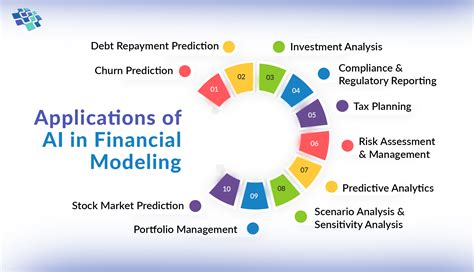
AI-driven predictive analytics finds numerous practical applications across the financial sector. In algorithmic trading, AI models predict short-term price movements to execute trades automatically, often at speeds impossible for humans. For risk management, AI can forecast credit defaults, identify potential fraud patterns, and assess market volatility.
Furthermore, wealth management firms use AI to predict client behavior, personalize investment portfolios, and anticipate financial needs. Within corporate finance, AI assists with revenue forecasting, capital expenditure planning, and supply chain optimization, extending its impact beyond just market trading.
The Future Landscape of Financial Forecasting
The trajectory of AI in financial forecasting is towards even greater sophistication and integration. We can expect advancements in Explainable AI (XAI) to address the interpretability challenge, making AI models more transparent and trustworthy. The convergence of AI with other emerging technologies, such as quantum computing, promises to unlock unprecedented computational power for even more complex simulations.
Real-time predictive capabilities will continue to improve, fueled by faster data processing and more adaptive algorithms. As AI systems become more autonomous and integrated into financial operations, they will fundamentally reshape how market participants strategize, operate, and mitigate risks in a constantly evolving global economy.
Frequently Asked Questions (FAQ)
What is AI-driven predictive analytics in financial forecasting?
AI-driven predictive analytics in financial forecasting uses artificial intelligence and machine learning algorithms to analyze vast datasets, identify complex patterns, and make highly accurate predictions about future financial market behavior, asset prices, and economic trends. It moves beyond traditional statistical methods by learning from data without explicit programming.
How does AI improve financial forecasting compared to traditional methods?
AI improves financial forecasting by offering enhanced accuracy through the detection of intricate, non-linear patterns often missed by traditional models. It provides superior speed in processing and analyzing real-time data, enabling quicker responses to market changes, and can integrate diverse structured and unstructured data sources for a more comprehensive market view.
What types of data do AI models use for financial forecasting?
AI models utilize a wide array of data for financial forecasting, including structured data like historical stock prices, trading volumes, macroeconomic indicators, and interest rates. They also increasingly incorporate unstructured data such as news articles, social media sentiment, satellite imagery, and corporate filings, processed using techniques like Natural Language Processing (NLP).
What are the main challenges of implementing AI in financial forecasting?
Key challenges include ensuring high data quality, as AI models are highly sensitive to errors or biases in the input data. The ‘black box’ problem, or lack of interpretability of complex AI models, can also be a hurdle, particularly for regulatory compliance. Other challenges involve significant computational resource requirements, ethical considerations, and the need for specialized AI talent.
Can AI predict market crashes or economic recessions with certainty?
While AI can significantly improve the probability and timeliness of predicting market downturns or recessions by identifying early warning signs and complex correlations, no predictive model, AI or otherwise, can offer absolute certainty. Financial markets are influenced by numerous unpredictable human and geopolitical factors, making definitive predictions impossible. AI provides probabilistic forecasts and risk assessments, not guarantees.