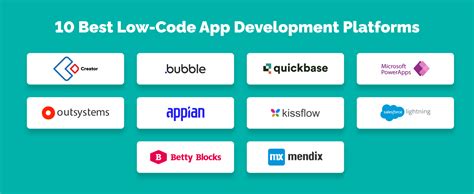
Empower Your SMB: Low-Code Platforms for Rapid App Development
In today’s fast-paced digital landscape, Small and Medium-sized Businesses (SMBs) are constantly seeking innovative ways to enhance efficiency and competitiveness. Low-Code Application Development Platforms for SMBs offer a powerful solution, enabling these businesses to build custom applications with minimal manual coding.
This revolutionary approach democratizes software creation, empowering even those without extensive programming knowledge to contribute to digital transformation. By streamlining the development process, low-code platforms help SMBs adapt quickly to market demands and foster internal innovation.
Understanding Low-Code Development
Low-code development refers to an approach that allows users to create applications through graphical user interfaces and configuration instead of traditional hand-coded programming. It primarily utilizes visual development environments, drag-and-drop components, and model-driven logic. This methodology significantly reduces the amount of manual coding required, accelerating the entire development lifecycle.
Unlike no-code platforms, which require no coding whatsoever and are often more rigid, low-code still allows for custom code insertion when specific functionalities are needed. This flexibility makes low-code a versatile tool for complex business requirements.
Why SMBs Are Embracing Low-Code Platforms
SMBs often face unique challenges, including limited IT budgets, a shortage of skilled developers, and the need for rapid digital solutions. Low-code platforms directly address these pain points by offering an accessible and cost-effective path to custom application development. They enable smaller teams to achieve what once required large, specialized IT departments.
This accessibility fosters a culture of innovation, allowing business users to directly participate in creating tools that solve their specific problems. It transforms digital initiatives from being an exclusive domain of IT professionals into a collaborative effort across the organization.
Key Benefits for Small and Medium Businesses
The adoption of low-code development platforms offers a multitude of advantages for SMBs looking to modernize their operations. These benefits collectively contribute to greater agility, reduced costs, and enhanced competitive edge in the market.
Accelerated Development Speed
Low-code tools significantly cut down the time required to develop and deploy applications. Drag-and-drop interfaces and pre-built components allow for rapid prototyping and iterative development, enabling SMBs to bring new solutions to market much faster. This agility is crucial for responding to evolving customer needs and seizing new business opportunities.
Reduced Costs and Resource Optimization
Hiring and retaining experienced software developers can be a substantial expense for SMBs. Low-code platforms mitigate this by allowing existing staff, often called “citizen developers,” to build applications, reducing the reliance on highly specialized and costly IT talent. This approach optimizes resource allocation and frees up valuable capital for other business investments.
Enhanced Agility and Flexibility
Business requirements can change overnight, and traditional development cycles often struggle to keep pace. Low-code platforms enable SMBs to quickly modify and update applications, ensuring their software solutions remain relevant and effective. This adaptability is vital for maintaining operational efficiency and customer satisfaction.
Improved Business Process Automation
Many low-code platforms come with robust capabilities for automating repetitive tasks and streamlining workflows. SMBs can build applications that automate everything from customer onboarding to inventory management, leading to significant productivity gains. Automating these processes reduces human error and allows employees to focus on more strategic activities.
Essential Features of Low-Code Platforms for SMBs
When evaluating low-code application development platforms, SMBs should look for several key features that ensure ease of use, scalability, and security. These functionalities are critical for successful implementation and long-term value.
A visual development environment with drag-and-drop functionality is paramount for intuitive app creation, enabling non-developers to build sophisticated applications. Robust integration capabilities are also crucial, allowing new low-code apps to seamlessly connect with existing business systems like CRM, ERP, and databases.
Furthermore, strong security features and compliance certifications are essential to protect sensitive business data. Scalability options are also vital to ensure that the platform can grow with the business, accommodating increasing user loads and data volumes. Finally, access to a vibrant community or comprehensive support resources can be invaluable for troubleshooting and continuous learning.
Choosing the Right Low-Code Platform for Your Business
Selecting the ideal low-code platform involves careful consideration of several factors tailored to your SMB’s specific needs and budget. It is not a one-size-fits-all decision, requiring a thorough assessment of available options.
Consider the learning curve for your team, the platform’s ability to integrate with your existing technology stack, and its pricing model. Also, evaluate the vendor’s reputation, customer support, and the platform’s scalability to ensure it meets both current and future business demands. A pilot project can often help gauge suitability before full commitment.
Implementation Best Practices and Potential Challenges
Successfully integrating a low-code platform into an SMB environment requires strategic planning and careful execution. While low-code offers numerous advantages, it also comes with potential pitfalls that businesses should be prepared to address.
Start with small, manageable projects to build confidence and demonstrate value, gradually expanding to more complex applications. Establishing clear governance rules for citizen developers and maintaining proper documentation are also crucial for long-term maintainability. Potential challenges include managing application sprawl, ensuring data security, and avoiding shadow IT scenarios if not properly managed. Addressing these proactively will maximize the benefits of low-code adoption.
The Future of Low-Code for SMBs
The trajectory of low-code application development platforms for SMBs points towards continued growth and increasing sophistication. As digital transformation becomes non-negotiable for businesses of all sizes, low-code will play an even more central role. Future platforms will likely integrate more AI and machine learning capabilities, further automating development tasks and offering predictive analytics for business processes.
The rise of hyper-automation, combining low-code with RPA and AI, promises even greater efficiency gains for SMBs. This evolution will empower smaller businesses to compete effectively with larger enterprises by leveraging cutting-edge technology without prohibitive costs. Embracing low-code now positions SMBs at the forefront of this digital revolution.
Frequently Asked Questions (FAQ)
What exactly is low-code development?
Low-code development is a software development approach that enables the delivery of applications faster and with minimal hand-coding. It uses visual interfaces with drag-and-drop features, pre-built modules, and model-driven logic to abstract and automate much of the coding process, making app creation more accessible.
How do low-code platforms specifically benefit SMBs?
Low-code platforms benefit SMBs by significantly reducing development time and costs, allowing non-technical staff (citizen developers) to build applications, and enhancing business agility. This helps SMBs quickly adapt to market changes, automate processes, and innovate without needing extensive IT resources or budget.
Are low-code platforms expensive for small businesses?
While costs vary by vendor and features, many low-code platforms offer tiered pricing models that are accessible to SMBs, including free trials or entry-level plans. The overall cost-effectiveness comes from reduced development time, lower reliance on expensive developer talent, and faster time-to-market for critical applications.
Do I need coding skills to use a low-code platform?
No, extensive coding skills are generally not required to use low-code platforms effectively. They are designed for both professional developers to accelerate their work and for ‘citizen developers’ (business users with little to no coding background) to build functional applications using visual tools. However, some platforms offer the flexibility to insert custom code for advanced functionalities.
What are the potential drawbacks or challenges of using low-code for SMBs?
Potential challenges include vendor lock-in, where migrating apps to another platform can be difficult, and concerns about scalability or customization limits for highly complex or unique requirements. SMBs also need to manage potential ‘application sprawl’ and ensure adequate security and governance, especially with multiple citizen developers creating applications.
How should an SMB choose the best low-code platform?
SMBs should choose a low-code platform by evaluating factors such as ease of use for their team, integration capabilities with existing systems, scalability for future growth, security features, and vendor support. It’s also wise to consider pricing models and start with a pilot project to assess suitability before committing fully.