
10 Cloud Technology In Banking Use Cases That Improve Speed And Customer Trust
Cloud technology in banking has shifted into a practical foundation for modern financial services because customers expect instant transactions, always-on mobile apps, and clear protection of personal data, while regulators expect resilient operations, auditable controls, and disciplined risk management. The most valuable cloud initiatives are not “lift-and-shift” migrations.
They are targeted use cases that reduce service latency, improve reliability, strengthen security, then make the customer experience more transparent when something goes wrong. When executed with strong governance, encryption, identity controls, and continuous monitoring, these use cases deliver speed without compromising trust. The ten examples below highlight how banks apply cloud capabilities to achieve measurable improvements in performance, stability, and customer confidence.

1. Core Banking Modernization Through Modular Services
A major benefit of Cloud technology in banking is the ability to modernize legacy core functions by decomposing monolithic systems into modular services that can be deployed and scaled independently. This reduces release risk because updates no longer require massive coordinated changes across the entire core, and it improves uptime because failures can be isolated to a single service instead of affecting the entire platform. Modular architectures also support faster product launches, allowing banks to introduce new account types, pricing models, and digital workflows with shorter development cycles and clearer operational visibility. Customers experience this as smoother app performance, fewer “maintenance windows,” then more consistent transaction processing, which directly increases confidence in the institution’s reliability.
2. Real-Time Payments With Elastic Scaling
Real-time payments demand low latency under peak volumes, and Cloud technology in banking supports this through elastic scaling that automatically increases compute and messaging capacity when traffic spikes during payroll days, holidays, or major e-commerce events. Cloud-native event streaming helps maintain throughput while preserving accuracy in settlement and reconciliation. This architecture reduces failed transfers and delayed confirmations, two issues that quickly erode trust because customers interpret them as instability or lost money. When combined with real-time status updates and robust monitoring, banks can deliver instant payment experiences that feel dependable even under heavy load, strengthening customer trust through consistent performance.
3. Fraud Detection and AML Monitoring With Cloud Analytics
Banks generate large volumes of transaction and behavioral data, and Cloud technology in banking enables near real-time analytics that improve fraud detection and anti–money laundering monitoring. Streaming pipelines can evaluate transactions as they happen, flag anomalous activity, and trigger additional verification when risk rises. Cloud-based machine learning can be updated more frequently, improving detection against evolving scams and synthetic identity attacks. Importantly, better analytics can reduce false declines, which customers perceive as friction and unreliability. By combining speed with smarter risk decisions, this use case supports safer approvals, quicker investigation, then better customer satisfaction during high-stress events like disputed charges.
4. Digital Onboarding and eKYC Automation
Account opening is often the first moment customers judge a bank’s competence, and Cloud technology in banking accelerates onboarding through orchestrated identity verification workflows such as document validation, biometric checks, and risk scoring. Cloud-based integration makes it easier to connect multiple KYC vendors and switch providers without rebuilding the entire flow. Automation can reduce manual review time while preserving strong audit trails and evidence capture, which is essential for compliance. Customers benefit through faster approvals and fewer repetitive steps, while the bank benefits through consistent controls, reduced fraud exposure, and the ability to scale onboarding during marketing campaigns without service degradation.
5. Open Banking APIs and Partner Ecosystems
Open banking relies on stable, secure, and observable APIs, making Cloud technology in banking a natural enabler for API gateways, throttling, authentication, and consent management. Cloud-native tooling helps banks publish and manage APIs at scale, monitor performance, and detect abuse patterns such as credential stuffing or token misuse. Strong API governance builds trust because customers can grant access to third-party apps with clearer control and revocation options. It also improves speed for innovation, allowing banks to launch partner products faster while maintaining consistent security standards across integrations, especially when third parties require predictable uptime and transparent incident communication.
6. Disaster Recovery and Multi-Region Resilience
Trust collapses quickly during outages, so Cloud technology in banking is widely used to strengthen disaster recovery through multi-region replication, automated failover, and regularly tested recovery runbooks. Cloud-based recovery can reduce recovery time objectives, ensuring critical services return faster after disruptions. It also supports continuous backup integrity checks and immutable backup patterns that reduce ransomware impact. Customers experience fewer prolonged outages and more stable access to accounts during crises, while regulators see clearer evidence of operational resilience. This use case is especially powerful when banks adopt hybrid strategies that keep certain workloads localized while still leveraging cloud for recovery readiness.
7. Data Lakes and Customer 360 Platforms
A unified view of the customer improves service quality, and Cloud technology in banking supports scalable data lakes that ingest information from cards, loans, mobile apps, call centers, then branch systems. With appropriate data governance, banks can build customer 360 platforms that improve personalization, reduce repetitive verification steps, and enable proactive support such as relevant alerts or tailored financial recommendations. Trust improves when customers feel the bank “remembers” their context and resolves issues faster. This use case also supports analytics for product performance and operational risk, provided privacy controls, role-based access, and data minimization practices are enforced to avoid over-collection and misuse.
8. Cloud-Native Security and Continuous Compliance Controls
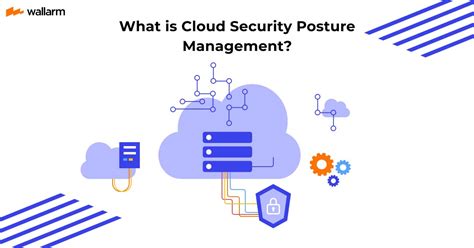
Security is a primary determinant of trust, and Cloud technology in banking enables continuous controls such as configuration monitoring, encryption enforcement, identity governance, and centralized logging across cloud resources. Cloud security posture management and policy-as-code guardrails help prevent misconfigurations that could expose customer data. Continuous compliance reporting can generate audit evidence more efficiently, reducing the risk of compliance drift between formal audits. Customers rarely see these controls directly, but they feel the results through fewer breaches, fewer service disruptions, and faster incident containment, which strengthens confidence that their financial data is protected.
9. AI-Powered Customer Support and Intelligent Self-Service
Customer support is often a major cost center and a major trust driver, and Cloud technology in banking enables AI-powered assistants that handle routine tasks such as card freezes, transaction explanations, appointment scheduling, and basic troubleshooting. When integrated with secure workflows and strong authentication, assistants reduce wait times and provide consistent answers across channels. For complex issues, cloud-based routing and summarization can transfer context to human agents, accelerating resolution and reducing customer frustration. This use case improves speed in the moments that matter most, such as disputed transactions, account access problems, or urgent security concerns.
10. DevSecOps Pipelines for Faster and Safer Releases
Banks must innovate without compromising safety, and Cloud technology in banking supports DevSecOps pipelines that automate testing, vulnerability scanning, policy enforcement, and controlled releases. This reduces deployment risk and shortens release cycles, enabling frequent improvements to mobile apps and digital services while maintaining audit trails and change management discipline. Customers benefit through quicker bug fixes, improved features, and fewer disruptive updates. Trust increases when the bank delivers steady reliability and visible progress rather than large infrequent changes that can introduce outages or regressions.
Conclusion
Speed and trust improve when Cloud technology in banking is applied to outcomes that customers and regulators value modular core modernization reduces downtime, elastic payments improve reliability during peaks, cloud analytics strengthens fraud protection while reducing false declines, digital onboarding shortens time to value, open banking APIs enable secure ecosystems, multi-region recovery protects availability, data platforms improve service context, cloud-native security supports continuous compliance, AI support accelerates resolution, then DevSecOps pipelines deliver safer innovation. The strongest banks treat cloud not as a destination but as an operating model built on governance, observability, and disciplined security. That approach turns faster technology delivery into a credible promise of reliability, transparency, and protection, which is ultimately what customers mean when they say they trust a bank.
Read more: 10 Cyber Security Technology Trends That Are Reshaping Digital Defense Worldwide